

TOTeM – Sequential oxidation of toluene gives insight into SOA formation from later-generation aromatics
Published: 16, September, 2026
TOTeM – Sequential oxidation of toluene gives insight into SOA formation from later-generation aromatics
By: Ditte Thomsen1, Merete Bilde1, and Siddharth Iyer2
1Center for Chemistry of Clouds, Department of Chemistry, Aarhus University, Denmark
2Siddharth Iyer, Aerosol Physics Laboratory, Physics Unit, Tampere University, Finland
In June and July 2026, the Center for Chemistry of Clouds at Aarhus University and the Computational Aerosols From Emissions (CAFE) at Tampere University joined forces to better understand toluene oxidation and its role in secondary organic aerosol (SOA) formation.
In the Aarhus University Research on Aerosol (AURA) atmospheric simulation chamber, we investigated toluene's sequential oxidation. When toluene is oxidised in the atmosphere, it forms ortho-cresol and subsequently 3-methylcatechol. The later oxidation products are expected to increase SOA yields because they are more reactive and have unique pathways to highly functionalised, condensable carboxylic acids.
To explore this further, Siddharth Iyer and his group moved the Tampere Orbitrap chemical ionisation mass spectrometer (CIMS) to Aarhus, Denmark, for a month. Combined with the extensive suite of particle-phase instrumentation available at the AURA chamber, we had the ideal setup to investigate the gas-phase formation of highly oxidised organic molecules and the products that eventually form SOA.
Preliminary data show promising insights into formation pathways and subsequent particle formation. In example, the CIMS instrument measured gas-phase molecules from ortho-cresol oxidation with up to 13 oxygen atoms. Their formation agrees well with the chemical pathways characterised by the CAFE group.
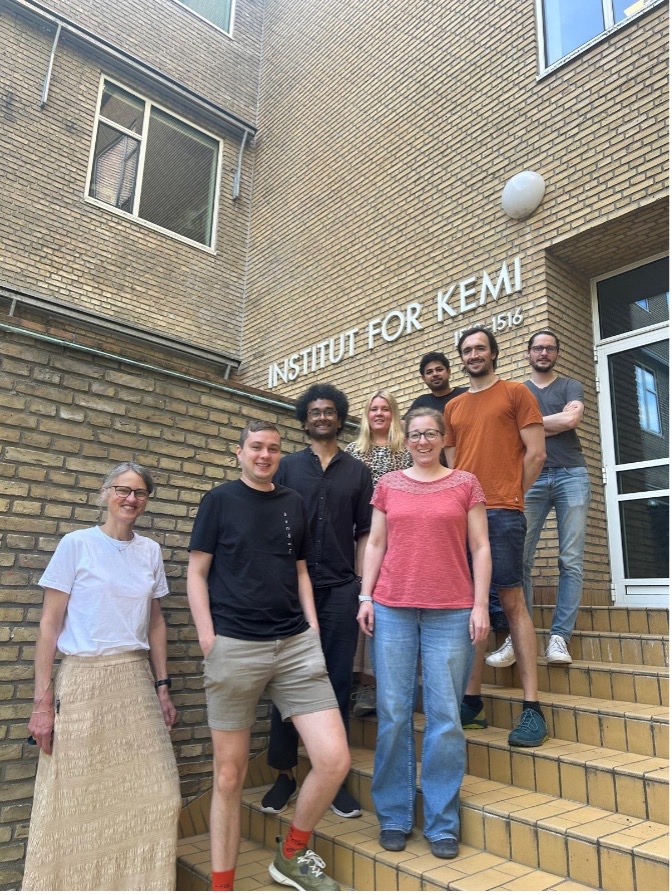
Figure 1 TOTeM participants outside the Deparment of Chemistry, Aarhus University, Denmark.